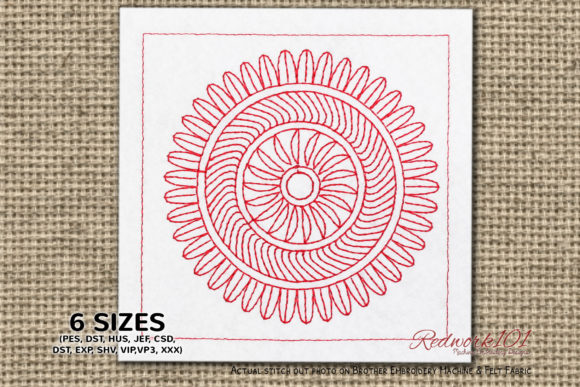
Round Mandala Review: A Redwork Gem for Small Business Branding
As an embroidery designer who has spent years digitizing and testing files for commercial use, I approach every new machine embroidery design with a critical eye. It is not just about whether a pattern looks pretty on a screen; it is about how that digital embroidery file translates into a tangible asset for a brand. Today, I am reviewing the Round Mandala, a stunning redwork embroidery piece described as intricate and charming. My goal is to evaluate its potential for small business merchandise, branded patches, and professional apparel decoration.
Upon first glance, the Round Mandala exudes a specific visual personality. The description highlights its "redwork" nature, which immediately signals a classic, rustic, and handmade aesthetic. Unlike modern, blocky logos often used in corporate settings, this design feels organic and artisanal. For a boutique owner, a florist, or a bakery looking to establish a warm, inviting brand identity, this visual language is powerful. It suggests craftsmanship and attention to detail, qualities that customers subconsciously associate with high-value handmade product lines.
Evaluating Real-World Business Applications
The true test of any embroidery file is its versatility across different substrates. The Round Mandala shines when applied to items that benefit from a decorative yet professional touch. Consider a local coffee shop wanting to upgrade their staff uniforms. Placing this design as a chest logo accent on a canvas apron creates an immediate sense of heritage and quality. The circular shape of the mandala works exceptionally well here, framing the chest area without overwhelming the garment.
For small business merch creators, the potential for embroidered patch production is significant. Because the design is self-contained within a round boundary, it is an ideal candidate for iron-on or sew-on patches. These can be sold as standalone accessories or added to tote bags and denim jackets as a value-add service. The "intricate" nature mentioned in the product description suggests that when stitched out, the design will have enough visual weight to stand out on a tote bag design or a cap front, provided the scale is managed correctly.
I also see strong potential for this design in the realm of customer gifts and event merchandise. A creative studio could use the Round Mandala to brand limited-edition run items, creating a sense of exclusivity. The charm of the redwork style makes it particularly suitable for industries like pet brands or children's boutiques, where a playful yet elegant vibe is essential. When used as a sleeve detail on a work shirt, it adds a subtle flair that distinguishes the wearer without looking like a generic corporate uniform.
Critical Considerations for Production
While the aesthetic appeal is high, a professional reviewer must address the technical challenges. The description notes that the design is "intricate." In the world of commercial embroidery, intricacy often correlates with higher stitch density. This is a crucial factor when planning production runs. If you intend to use this design on a small patch, say under 2.5 inches, you must verify that the fine details do not merge together. High-density areas can cause thread breaks or fabric puckering if the stabilizer is not chosen carefully.
Curved surfaces present another challenge. Applying the Round Mandala to a structured cap requires precise positioning. The center of the mandala must align perfectly with the crown of the hat to avoid distortion. Furthermore, redwork traditionally uses a single thread color, usually red, on a light background. If your client wants this on dark uniforms, you will need to discuss adding a satin border or a cut-out backing to ensure the design pops. Without these adjustments, a single-color redwork design might get lost against a navy or black fabric texture.
It is also vital to consider the durability of the finished product. Items like aprons and tote bags undergo frequent washing and wear. An intricate design with many small stops and starts may be more prone to snagging than a simple column stitch logo. Before committing to a large run, I always advise testing the design on the actual material intended for the finished product. This ensures that the thread colors maintain their vibrancy and that the structural integrity of the stitch holds up over time.
Impact on Brand Identity and Customer Trust
In a saturated market, visual consistency is key to building trust. The Round Mandala offers a unique opportunity to elevate a brand's perception. When a customer receives a package adorned with a beautifully embroidered patch featuring this design, it communicates that the business values quality and artistry. This tactile experience fosters a deeper emotional connection than a printed label ever could.
For Etsy sellers and craft business owners, using such a distinct design helps in creating recognizable design assets. If used consistently across packaging, social media printable mockup images, and physical goods, the Round Mandala becomes a symbol of the brand itself. It tells a story of tradition and care, which can justify a higher price point for custom apparel and accessories. The "charming" quality of the design invites engagement, making customers more likely to share photos of their purchases, thereby driving organic marketing.
Professional Designer Notes and Best Practices
Before integrating the Round Mandala into your commercial workflow, I recommend following a strict validation process. First, test the design in black and white or a high-contrast monochrome to ensure the lines remain distinct without relying on color variation. This is especially important for redwork styles where shading is achieved through stitch direction rather than thread changes.
- Check Scale: Verify that the design remains legible at the smallest size you plan to use, particularly for small patches or pocket logos.
- Review Contrast: Ensure your chosen thread color contrasts sharply with the garment color to maintain visibility.
- Inspect Spacing: Look for areas where stitches are too close together, which could cause bird nesting or thread breaks.
- Confirm Hoop Size: Although the exact dimensions are not specified in the description, ensure your hoop capacity matches the design requirements before purchasing.
- Test on Real Fabric: Always stitch a sample on the actual material (e.g., twill, canvas, jersey) to check for puckering.
- Use Proper Stabilizer: Given the intricate nature, a cut-away stabilizer is often safer than tear-away for long-lasting durability.
- Create Mockups: Generate a printable mockup for client approval to manage expectations regarding size and placement.
- Verify Licensing: Confirm the commercial licensing terms explicitly before using the file for goods intended for sale.
Finally, since the product description mentions that the "Box Stitch shown in the picture is option," clarify with the vendor whether this is included in the base file or requires a separate purchase. Do not assume exact stitch counts or file formats are universal; always request a specimen stitch-out if possible. By taking these precautions, you ensure that the Round Mandala serves as a robust, profitable asset for your embroidery business, enhancing both your portfolio and your clients' brands.