Paint Brush with Color Palette: A Designer's Review
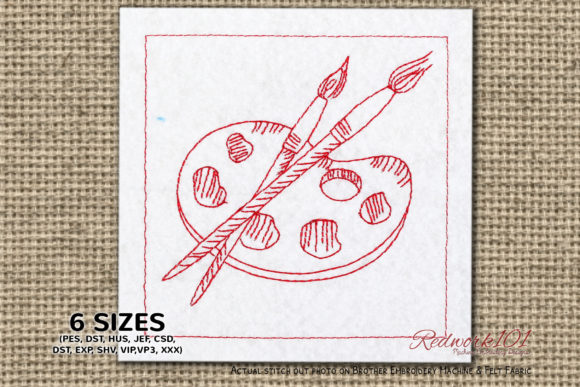
As an embroidery designer who spends countless hours digitizing and testing files for commercial use, I approach every new machine embroidery design with a critical eye. It is not just about whether a motif looks cute on a screen; it is about how that digital embroidery file translates into a tangible asset for a small business. Today, I am reviewing the Paint Brush with Color Palette, a lovely redwork embroidery piece that immediately caught my attention for its potential in the creative industry market. This design is not merely decorative; it is a strategic tool for branding.
The first impression of the Paint Brush with Color Palette is one of approachable professionalism. The description notes it as "redwork," which traditionally implies a single-color outline style, often associated with vintage charm and handmade authenticity. However, the mention of an optional "Box Stitch" adds a layer of versatility. For a boutique owner or a creative studio, this duality is gold. The design feels friendly and artistic without sacrificing clarity. It strikes a balance between a rustic, hand-drawn aesthetic and a clean, modern logo suitable for custom apparel and branded merchandise.
Real-World Application for Small Business Merch
When evaluating this design for small business merch, the possibilities are extensive. Imagine a local art supply store, a pottery studio, or a bespoke bakery looking to elevate their staff uniforms. The Paint Brush with Color Palette works exceptionally well as an apron embroidery accent. Placed on the chest or near the hem, it instantly communicates the nature of the business—creativity and craft—without needing words. Because redwork styles typically have lower stitch density than full-fill designs, they remain flexible and comfortable on garments that are worn for long shifts.
For Etsy sellers and handmade product creators, this design serves as a perfect brand marker. Consider applying it to tote bags. A canvas tote bag design featuring this motif acts as a walking advertisement. The simplicity of the lines ensures that even on textured fabrics like canvas or twill, the details remain crisp. Furthermore, for businesses selling physical goods, this image can be stitched onto a small embroidered patch and sewn onto product packaging or included as a free gift with purchase, enhancing the unboxing experience and fostering customer loyalty.
In the realm of cap embroidery, this design requires careful placement. The curved surface of a baseball cap can distort wide images. However, if the aspect ratio of the brush and palette is compact, it can serve as a striking side-panel detail or a small front-center logo for a creative agency's team hats. The key here is ensuring the "Box Stitch" mentioned in the description does not become too crowded when scaled down for headwear.
Brand Identity and Customer Trust
Visual consistency is the backbone of brand identity. Using a cohesive design like the Paint Brush with Color Palette across various touchpoints—from employee shirts to hang tags—builds recognition. When a customer sees the same high-quality embroidery on a uniform and a product label, it signals professionalism. It tells the consumer that the business cares about the details. In a market saturated with generic printed logos, a stitched design adds a tactile premium feel that elevates the perceived value of the finished product.
This specific design appeals to the "crafty side" of the audience, as noted in its description. For businesses in the sewing, crafting, or DIY sectors, using this imagery validates their niche. It creates an immediate emotional connection with buyers who identify as makers. It says, "We understand your passion because we share it." This alignment boosts buyer engagement and trust, making the brand feel more like a community partner than a faceless corporation.
Critical Considerations for Production
While the Paint Brush with Color Palette is a strong contender for commercial projects, there are areas where caution is required. As with any redwork or outline-style design, the spacing between lines is crucial. If you intend to use this for very small applications, such as a tiny sleeve logo or a miniature patch under two inches, you must verify that the gaps between the brush bristles or the palette wells do not merge together during stitching. High stitch density in surrounding areas or poor tension can cause "bird nesting," obscuring the fine details.
Fabric texture also plays a significant role. On plush towels or thick fleece, fine outlines can get lost. For these materials, I recommend opting for the optional Box Stitch if it provides a satin fill border, as this can help define the edges against a busy background. Additionally, when working on dark uniforms, thread color contrast is vital. Since this is described as redwork, ensure you select a thread color that pops against the garment base—a bright crimson on navy blue or a stark white on black—to maintain visibility and impact.
Washability is another factor for items like aprons and work shirts that undergo frequent laundering. Outline stitches can sometimes be less durable than fill stitches if not properly secured. It is essential to check the file for lock stitches at the beginning and end of each run. If the design lacks these, manual editing in your digitizing software may be necessary before mass production to prevent unraveling.
Practical Designer Notes and Testing
Before committing to a large run of commercial embroidery, I always follow a strict testing protocol. First, stitch the Paint Brush with Color Palette in black and white on a scrap piece of the actual fabric you intend to use. This removes the distraction of color and allows you to focus purely on the structure and spacing of the stitches. Check if the design holds up at the intended size, especially if you are aiming for a petite embroidered patch.
Review the thread colors suggested in the file. Even though it is redwork, the description mentions the outer box color is different ("dif"), implying a two-tone capability. Ensure these colors align with your specific brand guidelines. You may need to manually swap thread codes in your machine to match your corporate palette exactly.
Confirm the hoop size requirements. While redwork designs are often small, the inclusion of a box might increase the footprint. Ensure your hoop accommodates the design with enough margin for proper clamping, especially on curved items like caps where a cap frame is necessary. Always use the appropriate stabilizer; for stretchy knits, a cut-away stabilizer is non-negotiable to prevent distortion over time, whereas tear-away might suffice for stable wovens like denim or canvas.
Create a printable mockup for client approval. Show the design superimposed on photos of the actual merchandise—aprons, totes, or caps—to visualize the scale and placement. Compare it beside other design assets in your brand kit to ensure visual harmony. Finally, and perhaps most importantly, confirm the commercial licensing terms. The description highlights its appeal for the crafty side, but you must verify that the license permits unlimited production for resale or corporate branding. If the license terms are not explicitly clear in the file documentation, contact the creator before proceeding.
In conclusion, the Paint Brush with Color Palette is a versatile and charming addition to any embroidery library focused on the creative sector. With its blend of classic redwork style and optional framing, it offers flexibility for various applications, from rugged workwear to delicate boutique labels. By paying attention to stitch density, fabric compatibility, and licensing, small business owners can leverage this design to create memorable, high-quality merchandise that truly reflects their brand's spirit. Whether for Sewing enthusiasts or professional decorators, this file represents a solid investment in visual storytelling.